Name the format
Share the wax, solvent system or other product base, intended fragrance level, packaging and target market.

FRAGRANCES / HOME FRAGRANCE
The scent sets the scene. The product base decides how it performs. A candle, a reed diffuser and a room spray deserve their own development brief.
Start a project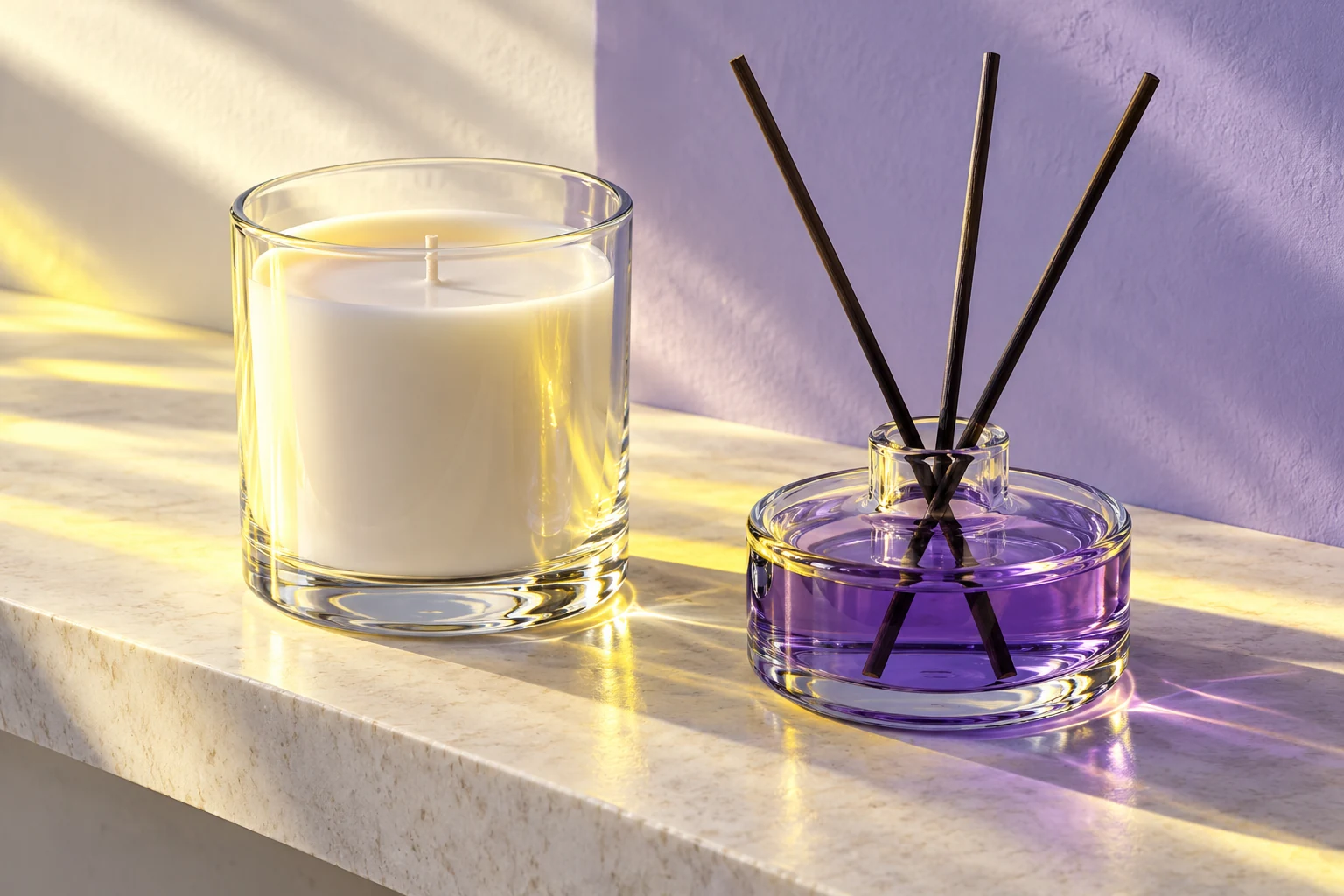
A BETTER BRIEF STARTS HERE
Share the wax, solvent system or other product base, intended fragrance level, packaging and target market.
A beautiful cold impression is only one part of the story. Agree how the finished product will be evaluated in the way it is intended to be used.
Safety, classification, labelling and application documentation relate to the actual formula and use. One product category cannot stand in for another.
Use creative collections to describe the sensory destination. Use the project brief to explain the product, process and market it has to work in.
Explore a creative directionA LITTLE CLARITY
Possibly, but each application needs assessment and evaluation. A shared creative direction does not guarantee an interchangeable formulation.
No. A sample is for evaluation under agreed conditions. Finished-product performance needs testing in your product system.
BEFORE YOU BRIEF US
They can share a creative theme, but describe each actual product and use separately. Base, format, intended performance and assessment questions need to fit the application.
Share the base, wick, vessel and relevant manufacturing information, alongside the scent direction and target market. Our candle fragrance brief gives a versioned worksheet.
Agree guidance for the selected material and intended use. Do not treat a maximum limit or a demonstration level as a universal recipe. The complete product needs its own appropriate assessment.
USEFUL NEXT STEPS
Connect the creative idea to the home-fragrance application.
GOOD CHEMISTRY STARTS WITH A CONVERSATION
Share the application and sensory target. We’ll start by scoping the right conversation.
Start a projectTalk samples