
THE SHORT ANSWER
Specify the exact natural-flavouring description, product and intended market in your brief. Natural flavouring and a named-source description have defined conditions. An undefined clean-label request should be translated into precise ingredient, declaration and evidence requirements.
What does natural flavouring mean?
Natural is a controlled description for food flavourings, not simply a mood or a synonym for a short ingredient list. The applicable rules distinguish natural flavouring substances, natural flavouring and certain named-source descriptions. Ask the supplier to address the wording you need for the material and intended market.
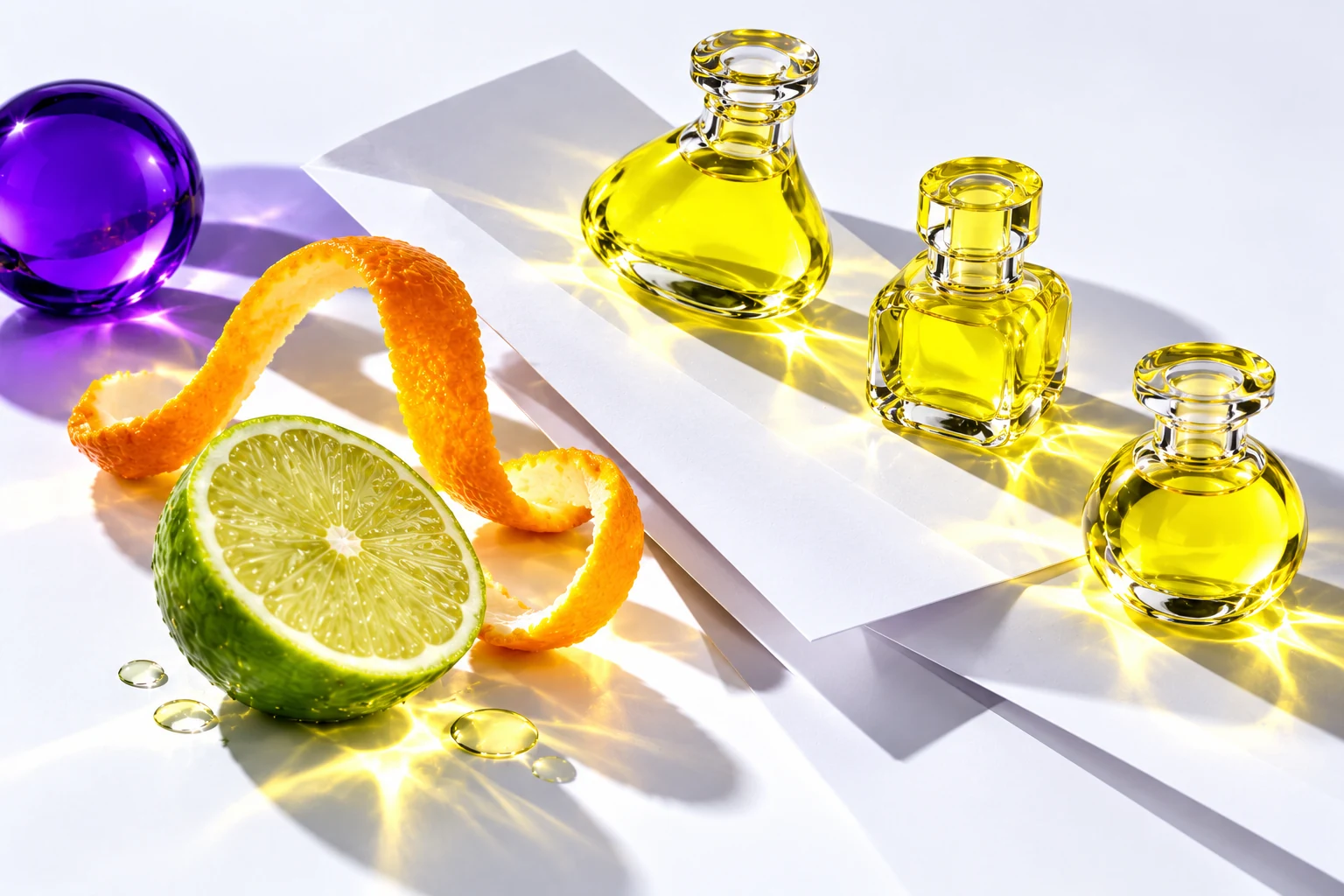
Do not infer the classification from a photograph of fruit, the flavour name or the colour of a liquid. A lemon direction can be described creatively before its formulation and supporting documentation are settled. The description on a technical or labelling file needs evidence tied to the actual material.
Is natural lemon flavouring the same as lemon-flavoured?
No. For a named natural-source description, Article 16 of Regulation 1334/2008 includes a condition that at least 95% by weight of the flavouring component comes from the named source. That percentage concerns the flavouring component, not the amount of lemon in the whole drink or the entire supplied mixture.
Other descriptions have their own conditions. Do not shorten a longer supplier description into a claim that changes its meaning. Ask the technical and labelling teams to confirm the exact wording for the final product, using the rules applicable to where it will be sold.
What should replace a vague clean-label request?
Turn the phrase into a list the project can check. Which ingredients or carriers must be excluded? Which declaration wording is needed? Is the requirement driven by a retailer policy, the brand proposition or a regulatory description? Record the actual requirement and who owns the decision.
| Vague request | More useful briefing question |
|---|---|
| Keep it natural | Which exact flavouring description and market are required? |
| Clean label | Which ingredients, declarations or customer policies must be met? |
| Real fruit taste | Which sensory characteristics and references define the target? |
| Nothing artificial | Which specific restrictions does the technical team mean? |
Why must I name the intended market?
The UK is not a sufficient regulatory instruction for every project. Identify Great Britain, Northern Ireland, the EU and any other intended market separately. Food Standards Scotland points buyers to the GB flavourings register and authorisation requirements; the European Commission provides the EU framework and lists.
This guide is a briefing aid, not a complete market-entry or labelling assessment. Ask the responsible specialists to check the current position and any relevant changes. Keep the source and review date with the project file rather than copying an old label into a new launch.
What evidence should I request?
Give the supplier the product identity, intended use and exact requirement. Ask for the information that supports the proposed description and any agreed restrictions. Ensure your technical team understands what a declaration covers, which version it refers to and what remains outside its scope.
A natural description does not replace checks for suitability in the actual application. Share the base and process, then agree the evaluation programme. If the flavour changes during development, ask whether the associated declarations and labelling review also need updating.
How do I put this into a flavour project?
Add a short requirements section to the flavour brief and connect it to food flavour development. Keep the sensory target and the ingredient requirements visible together so trade-offs can be discussed.
Start a project with the description you need, the markets and any customer policy. Precision at the start makes a much better creative constraint than the word clean on its own.
Sources & further reading
General guidance for project planning. Technical requirements depend on the actual formulation, intended use and market.